 PT
 EN
 ES
 FR
Blog
Acampamento Terra Livre: what the ATL is
The Apib's annual national mobilization: its origin, the online edition in 2020, the 2026 edition and a difference in the count of editions.

The Acampamento Terra Livre (ATL, the Free Land Camp) brings together Indigenous people from hundreds of peoples in Brasília. This post sums up what the sources say about what the camp is, since when it has been held and who organizes it, with data checked up to November 19, 2026.6
What it is
The Articulação dos Povos Indígenas do Brasil (Apib, Articulation of Indigenous Peoples of Brazil) (in Portuguese) describes the ATL as "a nossa mobilização nacional, realizada todo ano, a partir de 2004" ("our national mobilization, held every year since 2004"). According to the Apib's institutional page, the goal is to make the situation of Indigenous rights visible and to demand that the Brazilian State meet the demands of Indigenous peoples.1
The camp is also at the origin of the Apib itself. According to the organization, it was created by the Indigenous movement at the 2005 ATL. On its institutional page, the Apib presents itself as a national body that brings together regional Indigenous organizations: Apoinme (in Portuguese), ArpinSudeste (in Portuguese), ArpinSul (in Portuguese), Aty Guasu (in Portuguese), Coiab (in Portuguese), Conselho do Povo Terena (in Portuguese) and Comissão Guarani Yvyrupa (in Portuguese).23
Who organizes it
The Apib presents the 2026 edition as an "iniciativa" ("initiative") of the articulation. In 2020, when the camp was held online, Brasil de Fato also recorded the Apib as its organizer.45
Since when, and how many editions
The Ministry of Indigenous Peoples writes that the ATL "começou em 2004 com pouco mais de cem indígenas" ("began in 2004 with just over a hundred Indigenous people") and that today it brings together more than 7,000 Indigenous people from hundreds of peoples in the federal capital.6
The numbering of the editions, however, does not match a simple count from 2004. The Apib and the ministry call the 2026 camp the 22nd edition, and Brasil de Fato called the 2020 one the 16th edition. If the first edition was in 2004 and there was one per year, 2026 would be the 23rd. The sources consulted do not explain the difference, and the portal records both counts without choosing one.7
In 2020, online
In 2020, because of the covid-19 pandemic, the camp did not bring the delegations together in Brasília. The program was held virtually, from April 27 to 30, broadcast on the Apib's Facebook page.5
The 2026 ATL
The 2026 edition took place from April 5 to 11, at the Eixo Cultural Ibero-Americano, the former Funarte, in Brasília. The theme was "Nosso futuro não está à venda: a resposta somos nós" ("Our future is not for sale: we are the answer").4
The program released by the Apib included a plenary session on the violence of the military dictatorship against Indigenous peoples, with the proposal of a National Indigenous Truth Commission. It also included a march to Congress, a plenary session on the international action of the Indigenous movement, a panel on the 2026 elections and a second march, with the slogan "Demarca Lula" ("Demarcate, Lula"). The last day of activities was to be that of the final plenary, with the reading of the final document.8
The year before, according to the Apib, the 2025 ATL brought together more than 9,000 Indigenous people in Brasília, with the theme "APIB somos todos nós: em defesa da Constituição e da vida" ("APIB is all of us: in defense of the Constitution and of life"), on the articulation's 20th anniversary.9
The camp and the institutions
The ATL also goes through Congress. On April 7, 2026, the Chamber of Deputies held a solemn session in honor of the 22nd edition. The session was requested by congresswoman Célia Xakriabá (in Portuguese) and attended by minister Eloy Terena (in Portuguese).10
The ATL as a research subject
The camp is also studied at the university. In an article published in 2026 in the Revista de Antropologia, of USP (Universidade de São Paulo), the anthropologist Paola Andrade Gibram follows the Kaingang (in Portuguese) collective Nẽn Ga and the mobilizations it takes part in. According to the abstract, the annual holding of the ATL and of other gatherings is fundamental to renewing alliances between collectives and peoples. The author also links the existence of the Apib to these in-person gatherings.11
In short
According to the sources consulted, the ATL is an annual national mobilization organized by the Apib, which was born at one of these camps. In the 2020 and 2026 editions described here, it took place in April; the 2026 one, in Brasília, had marches, plenary sessions and a final document. The count of editions still needs a source that explains it.12
Read also
See the blog (in Portuguese)-
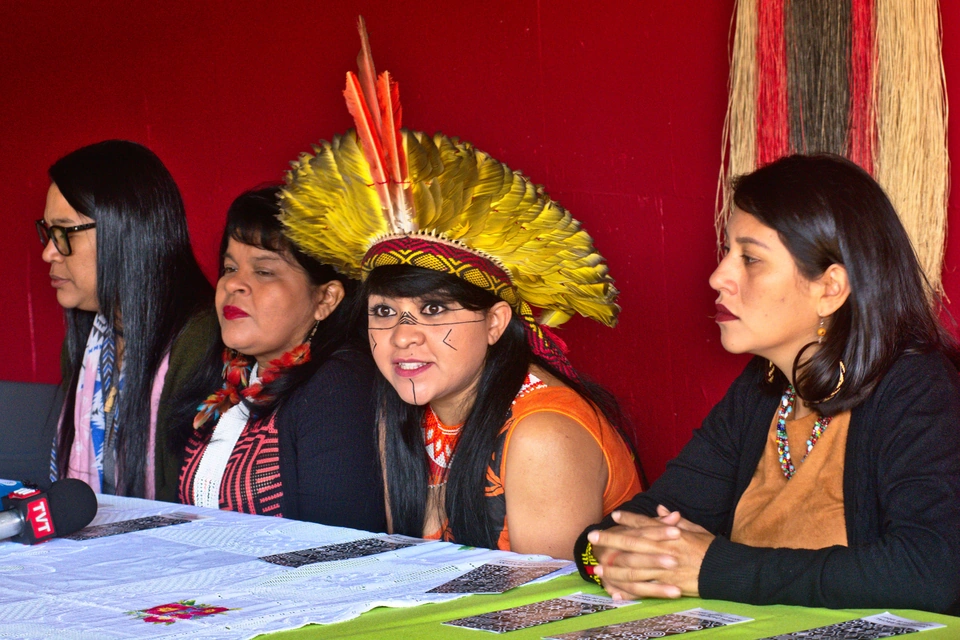 Image credit Press conference of the leaders Sônia Guajajara, Nyg Kaingang, Célia Xakriabá and Cristiane Pankararu, who presented the Marcha das Mulheres Indígenas. Memorial dos Povos Indígenas, August 9, 2019. Foto: Douglas Freitas / Apib Comunicação via Flickr · CC BY-SA 2.0 License CC BY-SA 2.0
mulheres indígenas · movimento indígena · política
Indigenous women in politics and in the movement: the Marcha, Anmiga and three trajectories
Da I Marcha das Mulheres Indígenas, em 2019, à quarta, em 2025: o que a Anmiga e as pesquisas registram, e os cargos de Célia Xakriabá, Sonia Guajajara e Joenia Wapichana no Congresso e no governo federal.
4-minute read
-
terras indígenas · desmatamento · meio ambiente
How Indigenous peoples help prevent deforestation
O que as pesquisas dizem sobre o efeito do reconhecimento das terras, da vigilância e do monitoramento indígena no desmatamento, o retrato de 2024 do MapBiomas e a pressão do garimpo e das invasões.
5-minute read
-
terras indígenas · direitos · legislação
How an Indigenous Land is demarcated
Do art. 231 da Constituição ao registro em cartório: o que a lei chama de terra tradicionalmente ocupada, as etapas do Decreto 1.775/1996, os prazos não cumpridos e o que mudou com a Lei 14.701/2023.
4-minute read

Provenance of the information
Recorded statements
14
Each piece of information on this page has a status and the sources that support it.
- 10 confirmed by a source
- 1 on which sources disagree
- 1 editorial inference
- 2 searched for and not found
Where sources disagree
One statement has different versions depending on the source.
Sources
5
- 2 Indigenous organizations
- 1 press
- 1 government body
- 1 academic study
Last research
November 19, 2026
Spotted an error? Contribute (in Portuguese)
How to cite this page
Version of . The access date is today’s.
- ABNT
-
PORTAL POVOS INDÍGENAS. Acampamento Terra Livre: what the ATL is. [S. l.], 2026. Disponível em: https://povosindigenas.com.br/en/blog/acampamento-terra-livre-o-que-e-o-atl/. Acesso em: dia do seu acesso.
- APA
-
Portal Povos Indígenas. (2026, November 19). Acampamento Terra Livre: what the ATL is. Retrieved date of your access, from https://povosindigenas.com.br/en/blog/acampamento-terra-livre-o-que-e-o-atl/