 PT
 EN
 ES
 FR
Blog
Marco temporal: what it is and where the debate stands
From the STF in 2023 to PEC 48/2023 (in Portuguese): what the court and Congress decided and what was still pending on November 19, 2026.
Since 2023, the dispute over the marco temporal (the time-frame thesis, which limits land claims to lands occupied on October 5, 1988) has gone through the Supremo Tribunal Federal (STF, Brazil's Supreme Court) twice, became law in Congress and reached a proposed amendment to the Constitution. This post brings together what the sources record up to November 19, 2026.14 The constitutional context, with Articles 231 and 232, is in the article Indigenous rights in the 1988 Constitution.
What the thesis is
Under the marco temporal thesis, Indigenous peoples would only have a right to the lands they occupied on October 5, 1988, the date the Constitution was promulgated, even if the community had been forcibly expelled before then and prevented from returning.1
The Articulação dos Povos Indígenas do Brasil (Apib, Articulation of Indigenous Peoples of Brazil) (in Portuguese) calls the marco temporal "uma tese política" ("a political thesis") and "inconstitucional e anti-indígena" ("unconstitutional and anti-Indigenous").2
The 2023 STF decision
The case that brought the issue to the STF was Extraordinary Appeal (Recurso Extraordinário) 1.017.365, with general repercussion (a ruling binding on other courts): a possessory action over the land of the Xokleng (in Portuguese), Kaingang (in Portuguese) and Guarani peoples, in Santa Catarina (in Portuguese), with the state of Santa Catarina on the other side. According to the Apib, the decision serves as a guideline for demarcation processes in the country.3
On September 21, 2023, the court rejected the thesis by 9 votes to 2. André Mendonça and Nunes Marques voted in favor of the marco temporal.4
On September 27, 2023, the Plenary set the thesis of Tema 1.031 (Theme 1.031), with Edson Fachin as rapporteur. The STF's official summary says that the rights to traditional lands are original and that demarcation is a declaratory procedure: it recognizes a right that already exists, it does not create it. Item III states that constitutional protection "independe da existência de um marco temporal em 5 de outubro de 1988 ou da configuração do renitente esbulho" ("does not depend on the existence of a time frame of October 5, 1988, or on a finding of persistent dispossession").5
The decision also dealt with lands unoccupied in 1988 and transferred to third parties in good faith, with just title: they remain in the area until they are compensated in advance, including for the bare land, if there is no resettlement.6
Lei 14.701/2023
Congress took another path. On that same September 27, 2023, the Senate approved bill PL 2.903/2023 (in Portuguese), which set the time frame at October 5, 1988. The president signed Lei 14.701 (in Portuguese) (the marco temporal law) on October 20, 2023, with vetoes on its main points. On December 14, Congress overrode part of these vetoes.7
Among the restored provisions is Article 4, which ties traditional occupation to the date the Constitution was promulgated. Under the text, the absence of the community on October 5, 1988, rules out traditional occupation, unless there is proven renitente esbulho (persistent dispossession), that is, a conflict over possession that began earlier and was still ongoing on that date.8
The STF again, in 2025
The law was challenged at the STF in ADC 87 (a declaratory action of constitutionality) and in ADIs 7582, 7583 and 7586 (direct actions of unconstitutionality), with Gilmar Mendes as rapporteur. In a virtual session that ended on December 19, 2025, the court declared unconstitutional the provision of Lei 14.701 (in Portuguese) that establishes the marco temporal. André Mendonça dissented on this point: for him, including the time frame in the law was "uma escolha legítima do Congresso Nacional" ("a legitimate choice of the National Congress").9
In the same decision, the STF set a deadline of ten years for the Union (the federal government) to conclude the pending demarcations and of 180 days for various orders to the public authorities. According to the court, these rules apply until Congress passes a new law.9
PEC 48/2023
On December 9, 2025, the Senate approved in two rounds PEC 48/2023 (in Portuguese) (a proposed constitutional amendment), authored by Senator Dr. Hiran (PP-RR), with a substitute text by the rapporteur Esperidião Amin (PP-SC). The vote was 52 to 14 in the first round and 52 to 15 in the second. The proposal writes the marco temporal of October 5, 1988, into the text of the Constitution itself and provides for prior compensation to regular occupants of the lands to be demarcated.10
The Chamber of Deputies received the PEC on December 11, 2025. On May 4, 2026, it was referred to the Committee on Constitution, Justice and Citizenship. As of the last recorded procedural step, of May 27, 2026, it was awaiting the appointment of a rapporteur.11
What is pending
The 2025 judgment was published on March 18, 2026, and received embargos de declaração (motions for clarification), an appeal that asks for clarification or correction of the decision. In June, Fachin, rapporteur of RE 1.017.365, requested more time to review the case (pedido de vista) so that the motions could be judged together with those of the 2023 case. The virtual judgment resumed on August 7 and was suspended on August 14, 2026, at the request of Justice Dias Toffoli for more time to review the case. In the check made on November 19, 2026, the last recorded procedural step was from September 2, 2026.12
Brasil de Fato described the appeals as motions against the 2023 decision and recorded three votes in the same direction, by Fachin, Zanin and Cármen Lúcia. The STF page for ADC 87 also records the vote of the rapporteur, Gilmar Mendes, joined by Alexandre de Moraes; Zanin and Fachin partly dissented from him. The text of the decision appears cut off on the page, and there is no final result.13
How to read the situation
As of November 2026, the STF had rejected the marco temporal in 2023 and in 2025; Congress approved it in a law in 2023, and the Senate, in a PEC in 2025. The dispute pits a fixed date against the reading that rights over the lands are original and that demarcation merely declares them.14
Read also
See the blog (in Portuguese)-
terras indígenas · direitos · legislação
How an Indigenous Land is demarcated
Do art. 231 da Constituição ao registro em cartório: o que a lei chama de terra tradicionalmente ocupada, as etapas do Decreto 1.775/1996, os prazos não cumpridos e o que mudou com a Lei 14.701/2023.
4-minute read
-
terras indígenas · desmatamento · meio ambiente
How Indigenous peoples help prevent deforestation
O que as pesquisas dizem sobre o efeito do reconhecimento das terras, da vigilância e do monitoramento indígena no desmatamento, o retrato de 2024 do MapBiomas e a pressão do garimpo e das invasões.
5-minute read
-
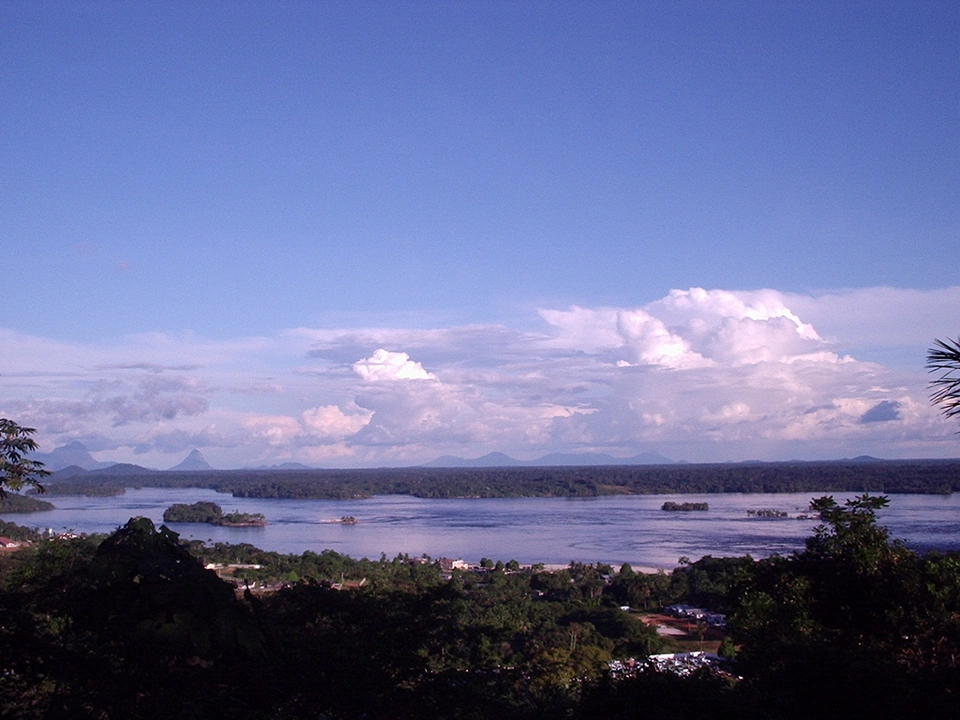 Image credit View of São Gabriel da Cachoeira (AM). Foto: Daniele Gidsicki / Flickr (Daniele Gidsicki) · CC BY 2.0 License CC BY 2.0
terras indígenas · clima · meio ambiente · desmatamento
Indigenous Lands and climate: what research shows
O que o MapBiomas, o Ipam e pesquisas acadêmicas dizem sobre a vegetação nas Terras Indígenas, onde os números divergem e como o clima entrou na pauta do movimento indígena.
4-minute read

Provenance of the information
Recorded statements
16
Each piece of information on this page has a status and the sources that support it.
- 13 confirmed by a source
- 1 editorial inference
- 2 searched for and not found
Where sources disagree
No disagreement between sources recorded on this page.
Sources
10
- 7 government bodies
- 1 press
- 1 Indigenous organization
- 1 legal text
Last research
November 19, 2026
Spotted an error? Contribute (in Portuguese)
How to cite this page
Version of . The access date is today’s.
- ABNT
-
PORTAL POVOS INDÍGENAS. Marco temporal: what it is and where the debate stands. [S. l.], 2026. Disponível em: https://povosindigenas.com.br/en/blog/marco-temporal-o-que-e-e-onde-esta-o-debate/. Acesso em: dia do seu acesso.
- APA
-
Portal Povos Indígenas. (2026, November 19). Marco temporal: what it is and where the debate stands. Retrieved date of your access, from https://povosindigenas.com.br/en/blog/marco-temporal-o-que-e-e-onde-esta-o-debate/